Dangerous Goods Shipping2026-05-23· Tosome Logis~11 min read
Dangerous Goods Air Export From Korea 2026 IATA DGR Rules — MSDS, UN Numbers, and DGD Paperwork
One wrong step in a dangerous goods air export gets your shipment sent back. Unlike general cargo, airlines will only accept a shipment once the UN number, hazard classification, MSDS, and DGD are all in order. Everyday products like lithium batteries, paint, chemicals, and aerosols can all fall under dangerous goods rules. Here's every hazard class, the required documents and packing standards, and the 2026 IATA DGR updates — organized around real processing requirements for exporters shipping from Korea.
1. What Is a Dangerous Goods Export? — UN Numbers and Hazard Classes Explained
Dangerous goods are materials that can cause explosion, fire, toxicity, or corrosion during transport, and IATA (International Air Transport Association) sorts them into 9 hazard classes. Everyday items like lithium batteries, paint, perfume, and aerosols all fall under one of these classes.
A UN number is a four-digit code used to identify dangerous goods internationally. Lithium-ion batteries, for example, are UN3480, and flammable liquids like paint are UN1263. Once the UN number is confirmed, the correct packing, labeling, and documentation standards can be applied.
💡 An MSDS (Material Safety Data Sheet) documents a chemical's composition, physical and chemical properties, hazards, and handling instructions. It's the starting point for any dangerous goods export — the UN number, hazard class, and packing standard are all determined from the MSDS.
2. The 9 Dangerous Goods Hazard Classes (Class 1-9)
Under IATA/IMDG rules, dangerous goods fall into 9 hazard classes below. Air eligibility, packing standards, and quantity limits all vary by class.
⚠️ Lithium batteries fall under Class 9, but due to the risk of aviation incidents, they're subject to their own PI (Packing Instruction) 965-970 requirements. Never assume "it's just a battery, it should be fine."
3. Required Documents for Dangerous Goods Air Export
The following documents must be complete before an airline will accept a dangerous goods air shipment. Missing even one can result in the cargo being returned or destroyed.
Document
Content
Prepared By
Required?
MSDS
Material Safety Data Sheet — chemical composition, hazards, handling
Issued by manufacturer
Required
DGD (Dangerous Goods Declaration)
Dangerous goods declaration — UN number, class, packing standard, quantity
Shipper or agent
Required
Shipper's Declaration
Shipper confirmation — signed statement that the dangerous goods information is accurate
Item name, price, quantity, exporter/importer information
Shipper
Required
Airline Approval
Prior application to the airline for certain classes (Class 1/7, Section I batteries, etc.)
Forwarder / airline
Required for certain classes
✅ At Tosome Logis, just submit an MSDS and we'll prepare the DGD, Shipper's Declaration, and packing specification for you. No prior documentation experience needed.
4. The 6-Step Dangerous Goods Air Export Process
Dangerous goods air export involves more steps than general cargo. Understanding the 6-step flow below in advance keeps your shipment moving without delay.
01
Submit MSDS and confirm UN number / hazard class
Submit the manufacturer-issued MSDS, and your forwarder will confirm the UN number, hazard class, and packing instruction (PI).
MSDS can be in English or Korean (English preferred)New chemicals without an assigned UN number require prior classification
02
Determine packing standard and prepare UN-certified containers
The Packing Instruction (PI) determines the permitted quantity and container specification. UN-marked certified containers are prepared accordingly.
Primary packaging: a leak-proof sealed container for liquidsOuter packaging: UN-certified box or drumCushioning: absorbent material capable of absorbing at least 30% of the contents is required
03
Prepare DGD and Shipper's Declaration
The Dangerous Goods Declaration (DGD) and shipper confirmation are prepared, and the shipper signs. Tosome Logis handles this on your behalf.
DGD: records the UN number, proper shipping name, hazard class, packing group, quantity, and container typeShipper's Declaration: requires the shipper's signature (obtained separately when we handle it for you)
04
Attach labels and markings
The dangerous goods diamond label, UN number, and orientation arrows (if applicable) must be affixed to the outer packaging in the correct position.
Dangerous goods label: diamond mark per hazard class (100mm × 100mm minimum)UN number marking: displayed on the outer packaging in the format "UN XXXX"Orientation arrow label: required when the contents are liquid
05
Airline acceptance and security screening
The airline inspects the completed documentation and packing condition. If everything checks out, the cargo is accepted.
Certain classes require prior airline approval — 24-72 hoursPoor packing condition or incomplete documentation results in immediate rejection
06
Dispatch and destination customs clearance
After air dispatch, customs clearance at the destination proceeds based on the dangerous goods declaration.
Same-day intake generally means same-day dispatch (given complete documentation and packing)Arrival in 1-3 days to major US/European cities, 1-2 days to Southeast Asia
Dangerous goods packing is entirely different from general cargo. Airlines will never accept a container without a UN mark.
What Is a UN-Certified Container?
A UN-certified container is one that has passed drop, pressure, and leak tests to UN standards. The container is stamped with the "UN" mark along with the packing group (X/Y/Z), container type code, and maximum permitted weight. Every inner and outer packing layer used for dangerous goods must be a UN-certified container as specified by the applicable PI.
Glass, plastic, or metal containers all acceptable (per PI)
Intermediate Packaging
Protects the inner packaging; filled with absorbent material (capable of absorbing at least 30% of total liquid volume)
Required when the inner packaging is glass
Outer Packaging
UN-marked reinforced corrugated board, drum, etc.
Must use a container code allowed under the applicable PI
Packing Group (PG)
PG I (high hazard), PG II (medium hazard), PG III (low hazard)
Found on the MSDS
Maximum Quantity
Varies by Section I/II/III under the applicable PI
Exceeding the limit requires special airline approval
6. Key Changes in the 2026 IATA DGR
The 2026 IATA DGR 67th edition introduced several important changes for dangerous goods air export. Review the following before shipping.
Lithium batteries, Section II: Adjustments to permitted quantities and packing standards. Clarified conditions for applying Section II to batteries of 100Wh or below
E-cigarettes and vapes: Stricter classification. Separate handling guidelines now apply
Updated UN number packing instructions: Several UN number PIs were revised, with clearer packing standards especially for chemical sample categories (UN1993, UN1263)
⚠️ The IATA DGR is revised every year. Checking against the latest edition before shipping is essential. Tosome Logis always processes shipments under the most current DGR rules.
7. Top 5 Most Frequently Rejected Dangerous Goods Types
Here are the item types most often rejected or returned among dangerous goods export requests. Knowing them in advance can shorten your preparation time.
1
Lithium batteries (Class 9 — UN3480/UN3481)
PI 965-970 applies depending on Wh capacity. Section I products require airline pre-approval, and some cannot be loaded on passenger aircraft at all. Failing to meet packing quantity, orientation label, or state-of-charge (30% or below) requirements results in immediate rejection.
2
Paints and coatings (Class 3 — UN1263)
Classified as Class 3 flammable liquid. The packing group is determined by flash point, and requires UN-certified containers and accurate DGD preparation. Declaring it as general cargo under the label "coating" and getting caught results in serious penalties.
3
Perfume and alcohol-based cosmetics (Class 3)
Perfumes, hand sanitizers, and some cosmetics with high alcohol content are classified as flammable liquids. Mistaking them for ordinary consumer goods and packing them normally often results in rejection at the airport. Check the volume threshold (whether the consumer-goods exemption applies) first.
4
Chemicals and lab reagents (Class 3/6/8)
Research reagents and industrial chemicals can fall under Class 3 (flammable), Class 6 (toxic), or Class 8 (corrosive) — sometimes more than one. Without an MSDS, classification isn't even possible. When multiple classes apply, the stricter standard governs.
5
Aerosols (Class 2 — UN1950)
Spray products fall under Class 2 (gas). Additional classification may apply depending on flammability of the contents, and exceeding the volume threshold (e.g. 1L per unit) bans them from passenger aircraft.
8. Tosome Logis Dangerous Goods Service
If nobody else will take your shipment, come to Tosome Logis. An MSDS is all you need to get started. We handle every document — DGD, Shipper's Declaration — and process all of Class 1-9.
Tosome Logis has hands-on air export experience with a wide range of dangerous goods, including lithium batteries (UN3480/UN3481), chemical reagents (UN1993/UN1263), perfume and cosmetics (UN1266), and paints (UN1263). We handle the entire process — classification, packing, DG declaration, customs clearance, and shipping. See also our lithium battery air freight guide and complete dangerous goods packing guide.
Tosome Logis Dangerous Goods Export Service Terms
📄Get started with just an MSDS — DGD, Shipper's Declaration, and packing specifications all prepared for you
⚡Same-day intake, same-day dispatch — with complete documentation and packing
🔬Small samples welcome — we handle quantities as small as 10g that most competitors refuse
🏷️Full Class 1-9 coverage — lithium batteries (PI965-970), chemicals, paint, aerosols, all handled
📦Dedicated dangerous goods packing design and execution — from sourcing UN-certified containers to attaching labels
🔋Lithium battery PI/Section guidance — consulting on the best approach for each PI965-970 threshold
♻️Re-shipment of returned dangerous goods — cargo rejected by other providers can be repackaged and re-shipped
🧪Track record exporting 70 chemical items in a single shipment — experience with complex, large-scale dangerous goods handling
9. Frequently Asked Questions About Dangerous Goods Export
A dangerous goods export is a shipment of material classified as hazardous under IATA (air) or IMDG (sea) regulations. These fall into 9 hazard classes — explosives, flammable liquids, toxic substances, lithium batteries, and more — each with different documentation, packing, and transport requirements. An MSDS is the most basic required document.
The MSDS is the most fundamental required document for dangerous goods air export. Without it, the DGD cannot be prepared and the airline will not accept the shipment. Once you have the MSDS, Tosome Logis can prepare the remaining documents — DGD, Shipper's Declaration — on your behalf.
Yes. Even samples as small as 10g/10ml can be exported with the right UN-certified packaging and documentation. Tosome Logis has a track record of handling exports of chemical samples as small as 10g. Even small quantities are subject to the same dangerous goods regulations, so always work with a specialist provider.
Lithium batteries are subject to PI 965-970 depending on Wh capacity. Lithium-ion cells at 20Wh or below, and battery packs at 100Wh or below, fall under the simpler Section II rules. Above 100Wh up to 300Wh requires Section I B and airline approval. Single cells above 300Wh cannot go on passenger aircraft and require cargo-only transport.
With complete documentation and packing, same-day intake and same-day dispatch is possible. Typically, after MSDS submission, document review and packing preparation takes 1-2 days before dispatch. Courier transit is about 1-3 days to the US/Europe and 1-2 days to Southeast Asia. Classes requiring airline approval add 24-72 hours.
No. Tosome Logis handles everything from selecting UN-certified packaging to arranging internal cushioning and labeling. Just hand over the cargo and we'll process it to IATA standards.
1. Personal Information Collected and Collection Method
Tosome Logis (the "Company") collects the following personal information to provide services such as customer inquiries, quote requests, and shipping consultations.
Items collected: name, email, phone number, address, cargo information, and any other information provided by the customer
Collection method: direct input via the website inquiry form, email inquiries, phone consultations, etc.
2. Purpose of Collection and Use
Responding to inquiries and quote requests
Confirming cargo information and contacting customers to provide shipping services
Service-related notices and customer support
Improving logistics service quality and providing tailored guidance
3. Provision and Sharing of Personal Information
The Company does not disclose personal information to third parties without customer consent, except in the following cases.
When the customer has given prior consent
When required by law or requested by a government authority
When minimal information must be shared with partner carriers (FedEx, DHL, UPS, etc.) necessary to complete shipment
4. Retention and Use Period of Personal Information
Item
Reason for Retention
Retention Period
Inquiry and consultation history
Preventing service confusion, dispute resolution
3 months
Contract and payment information
Act on Consumer Protection in Electronic Commerce
5 years
Log records
Protection of Communications Secrets Act
3 months
5. Procedure and Method of Destroying Personal Information
Paper documents: shredded or incinerated
Electronic files: deleted using methods that prevent recovery
Customers may request to view, correct, or delete their personal information at any time. Requests are processed without delay after identity verification.
9. Security Precautions
Use a combination of letters and numbers in your password, and change it periodically.
Log out and close your browser after using shared or public devices.
Do not leave personal information on message boards, chat windows, etc.

 KR
KR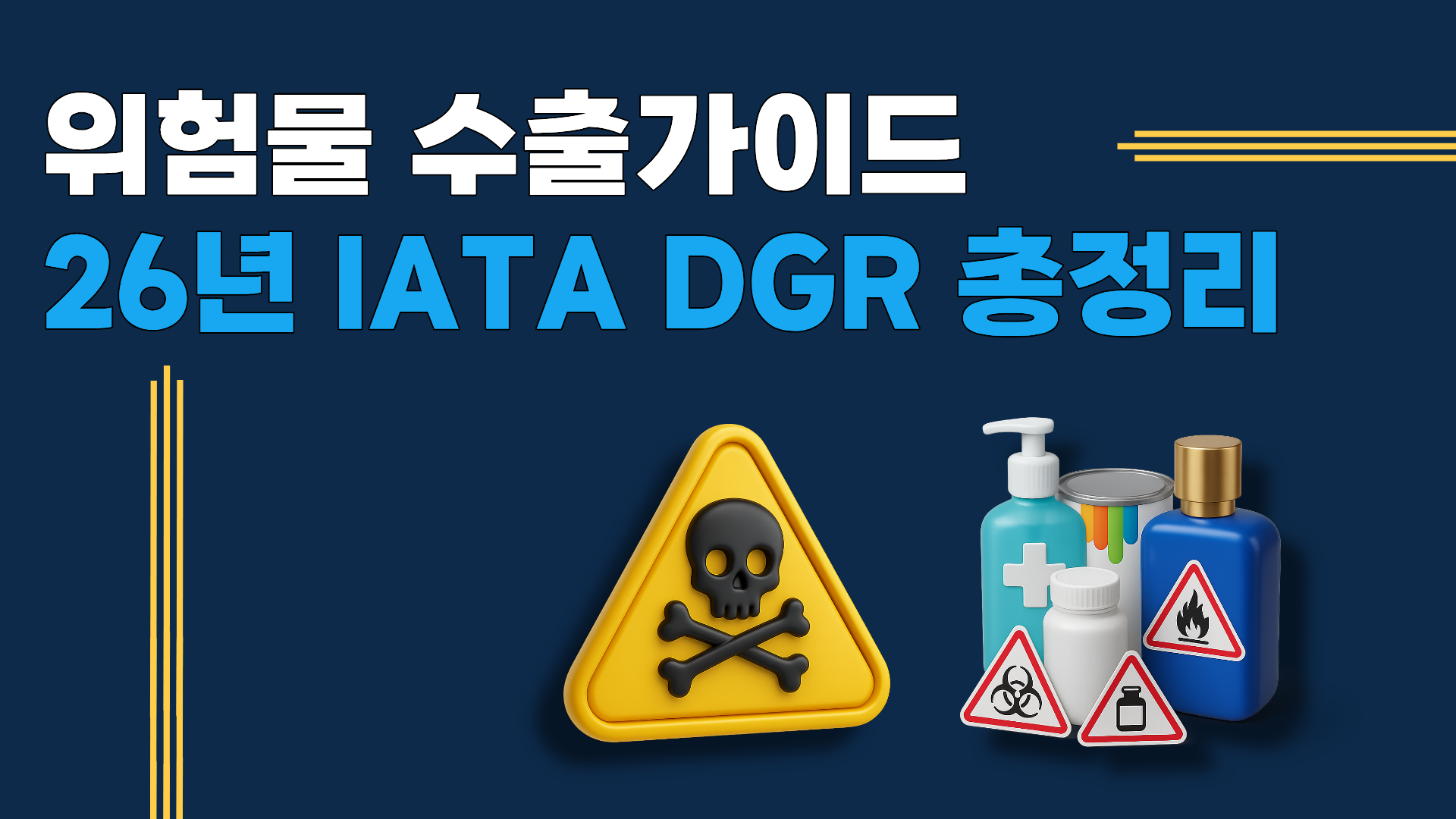
 KakaoTalk
 Naver Blog