Dangerous Goods Guide2026-06-03· Tosome Logis~7 min read
MSDS & UN Number Documentation Everything to Check Before You Export
Not knowing how to prepare dangerous goods paperwork stops a lot of exporters before they even start. It's widely believed that without an MSDS, export simply isn't possible — but there are solutions. Here's every document type needed for a dangerous goods export from Korea, what's inside an MSDS, how to look up a UN number, how to prepare a DGD, and the Limited Quantity exemption thresholds, laid out step by step.
1. Every Document Type Needed for a Dangerous Goods Export
The documents required for a dangerous goods export vary by cargo type, transport mode (air/sea), and destination country. The table below covers the typical required documents and what each one does.
Document
Role
Prepared By
Air/Sea
MSDS (SDS)
Hazard and handling information
Issued by manufacturer
Air & sea, both
DGD (Dangerous Goods Declaration)
Air dangerous goods declaration
Shipper (forwarder can prepare)
Air
Shipper's Declaration
Shipper's guarantee that the contents are accurate
Shipper (forwarder can prepare)
Air
IMDG DG Declaration
Sea dangerous goods declaration
Shipper (forwarder can prepare)
Sea
Commercial Invoice
Cargo value and item description
Shipper
Air & sea, both
Packing List
Packing content and quantity
Shipper
Air & sea, both
Packing Certificate
Proof of UN-certified packaging
Packing provider
Case by case
💡 Documents Tosome Logis prepares on your behalf: DGD, Shipper's Declaration, IMDG DG Declaration, packing list. Just hand over the MSDS and we'll prepare everything else in one package.
2. What Is an MSDS? — The 16 Sections Explained
An MSDS (Material Safety Data Sheet), also increasingly called an SDS (Safety Data Sheet), documents the hazards and safe handling information for a chemical or dangerous good. Under international standards (GHS), it's organized into 16 sections.
Section
Section Name
Key Content
Sec. 1
Identification of the substance and company
Product name, manufacturer, emergency contact
Sec. 2
Hazard identification
GHS classification, warning labels
Sec. 3
Composition/information on ingredients
Chemical composition, CAS numbers
Sec. 4-8
First aid, fire, spill, handling & storage
Emergency response procedures
Sec. 9
Physical and chemical properties
Flash point, boiling point, specific gravity, etc.
Sec. 14
Transport information
UN number, hazard class, PI number — most important for export
Sec. 15-16
Regulatory information & other
Whether export/import restrictions apply
The most important section for a dangerous goods export is Section 14 (transport information). The UN number, hazard class, packing group (PG), and PI number are all specified here.
3. What to Do If You Don't Have an MSDS
No MSDS doesn't mean you have to give up right away. Try the steps below to find a solution.
01
Request an MSDS from the manufacturer
This is the most accurate approach. Contact the manufacturer's sales representative or technical department and request an SDS/MSDS. Most manufacturers are obligated to provide one.
For overseas manufacturers, check the SDS download section of the product websiteMost email requests are fulfilled within 1-3 days
02
Use a similar product's MSDS
Reference a product with the same composition and hazard class, and discuss with your forwarder. Note that different composition can change the transport class, so expert review is required.
03
Check the Limited Quantity (LQ) exemption
If the shipment quantity falls under the Limited Quantity exemption threshold, dispatch as general cargo without an MSDS may be possible in some cases. Tosome Logis will check eligibility for you free of charge.
04
Have an MSDS newly prepared by a specialist agency
A domestic MSDS preparation agency can also draft one from scratch. Providing composition information (TDS, specification sheets, etc.) enables preparation.
4. What Is a UN Number? — How to Look It Up and Use It
A UN number is a four-digit code used to identify dangerous goods internationally. You need a UN number before you can prepare dangerous goods documentation.
①
Check Section 14 of the MSDS
In most cases, the UN number is listed in Section 14 (transport information) of the MSDS (SDS). This is the fastest way to confirm it.
②
Search the IATA DGR or the IMDG Code
For air, look up the substance name or chemical formula in the IATA DGR (Dangerous Goods Regulations); for sea, use the IMDG Code. Since these are specialist references, it's more practical to ask your forwarder to confirm.
③
Ask a specialist forwarder
Tell Tosome Logis the item name and composition information, and we'll look up the UN number for you free of charge.
5. How to Prepare a DGD (Dangerous Goods Declaration)
A DGD (Dangerous Goods Declaration) is a declaration that the shipper prepares and signs for air dangerous goods transport. False or incorrect information can result in the carrier refusing the shipment or legal liability.
Field
Content
Example
Shipper information
Sender's name, address, contact
Jane Doe, Gyeyang-gu, Incheon...
Consignee information
Recipient's name, address
John Smith, Los Angeles...
Transport mode
Passenger vs. cargo aircraft
Cargo Aircraft Only (CAO), etc.
UN number
4-digit UN number
UN3480
Proper Shipping Name
Official dangerous goods name
LITHIUM ION BATTERIES
Hazard class
Class/Division
Class 9
Packing Group (PG)
I, II, or III
II
Quantity & weight
Number of packages, total weight
2 packages, 5 kg
Packaging type
UN-certified packaging code
4G/X5/S
Shipper's signature
Handwritten signature and date
—
⚠️ Only staff trained in dangerous goods handling may prepare a DGD. A DGD prepared by an untrained person will be rejected by the airline. Tosome Logis prepares the DGD for you and collects only the shipper's signature.
6. Exporting Without Full Documentation — Limited Quantity Exemption
Even dangerous goods can be dispatched like general cargo, with some documentation requirements waived, if they meet the Limited Quantity (LQ) exemption threshold. Not every dangerous good qualifies for LQ treatment, though.
✅ Limited Quantity exemption criteria, summarized:
The item must meet both an inner-packaging volume threshold (varies by class) and a per-package total weight limit of 30kg or below. Attaching the LQ diamond mark to the outer packaging can allow dispatch without a DGD or MSDS in some cases. The exact thresholds vary by item, so check with your forwarder.
7. Tosome Logis Dangerous Goods Documentation Service
If you have an MSDS, Tosome Logis handles every remaining document. Our dangerous-goods-certified staff review and prepare the paperwork directly.
Tosome Logis Dangerous Goods Documentation Service
📄MSDS review — confirm Section 14 transport information, auto-determine UN number, class, and PI
✍️DGD & Shipper's Declaration prepared for you — shipper only needs to sign
🚢IMDG DG Declaration preparation — sea dangerous goods documents handled the same way
🔍Free Limited Quantity (LQ) eligibility check — confirm first whether you even need an MSDS
🏷️Dangerous goods labeling and marking handled — including UN number and class labels
⚡Same-day processing — once documentation is complete, same-day intake and same-day dispatch
8. Frequently Asked Questions About Dangerous Goods Documentation
Not necessarily. Getting an MSDS from the manufacturer is standard, but if your shipment meets the Limited Quantity (LQ) exemption threshold, dispatch without an MSDS may be possible in some cases. Using a similar product's MSDS or having one newly prepared by a specialist agency are also options. Start by explaining your situation to a forwarder and checking your options.
The UN number is often listed in Section 14 (transport information) of the MSDS. If not, you can search the IATA DGR (air) or IMDG Code (sea) by substance name, or the fastest route is to give a dangerous goods specialist forwarder the item name and composition information and ask them to confirm.
In principle, the shipper prepares and signs the DGD, but shippers without dangerous goods training find it difficult to do themselves. Tosome Logis prepares the DGD on your behalf — the shipper only needs to sign.
A Limited Quantity (LQ) exemption applies relaxed rules when a dangerous good's inner packaging volume and per-package weight fall below certain thresholds. Meeting LQ criteria exempts some DGD/MSDS requirements. The exact thresholds vary by item, so check with a specialist forwarder.
Tosome Logis handles MSDS review, UN number lookup, and DGD/Shipper's Declaration preparation for dangerous goods exports from Korea, all in one place. Just send us your MSDS and we'll take care of the rest. Contact us via KakaoTalk or at 0507-1399-4075.
1. Personal Information Collected and Collection Method
Tosome Logis (the "Company") collects the following personal information to provide services such as customer inquiries, quote requests, and shipping consultations.
Items collected: name, email, phone number, address, cargo information, and any other information provided by the customer
Collection method: direct input via the website inquiry form, email inquiries, phone consultations, etc.
2. Purpose of Collection and Use
Responding to inquiries and quote requests
Confirming cargo information and contacting customers to provide shipping services
Service-related notices and customer support
Improving logistics service quality and providing tailored guidance
3. Provision and Sharing of Personal Information
The Company does not disclose personal information to third parties without customer consent, except in the following cases.
When the customer has given prior consent
When required by law or requested by a government authority
When minimal information must be shared with partner carriers (FedEx, DHL, UPS, etc.) necessary to complete shipment
4. Retention and Use Period of Personal Information
Item
Reason for Retention
Retention Period
Inquiry and consultation history
Preventing service confusion, dispute resolution
3 months
Contract and payment information
Act on Consumer Protection in Electronic Commerce
5 years
Log records
Protection of Communications Secrets Act
3 months
5. Procedure and Method of Destroying Personal Information
Paper documents: shredded or incinerated
Electronic files: deleted using methods that prevent recovery
Customers may request to view, correct, or delete their personal information at any time. Requests are processed without delay after identity verification.
9. Security Precautions
Use a combination of letters and numbers in your password, and change it periodically.
Log out and close your browser after using shared or public devices.
Do not leave personal information on message boards, chat windows, etc.
 KR
KR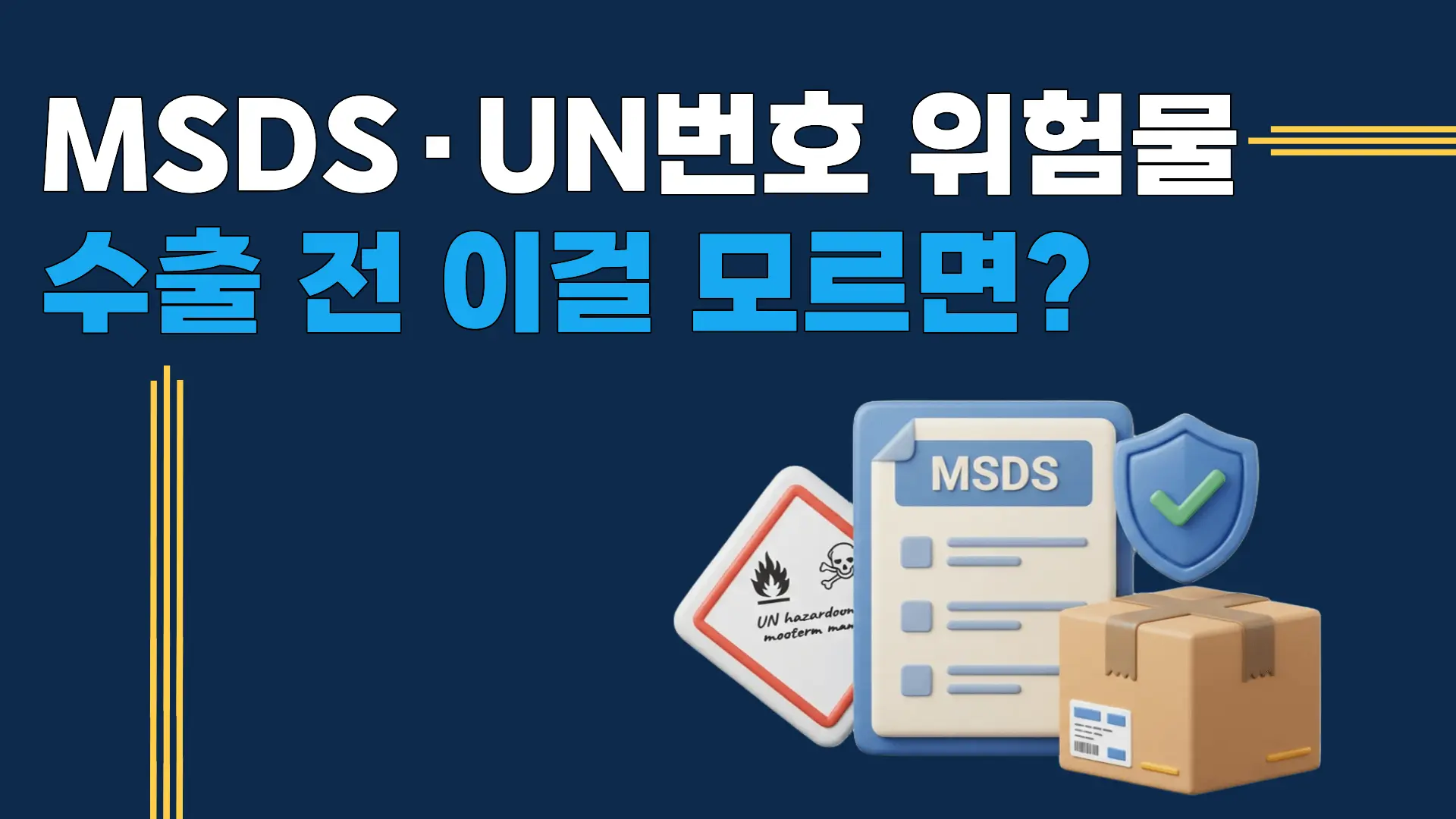
 KakaoTalk
 Naver Blog