1. What Is an MSDS? — 30-Second Overview
An MSDS (Material Safety Data Sheet) is a formal document covering a chemical's hazards, handling procedures, emergency response, and transport information across 16 sections. Airlines, shipping lines, and forwarders all require an MSDS for dangerous goods exports.
The MSDS is what lets you confirm the UN number and hazard class (Class), and determine whether the shipment can even be transported.
💡 The key point: the MSDS is the starting point and the single most important document in a dangerous goods export. If you have an MSDS, just send it straight to Tosome Logis.
2. How to Submit an MSDS for Dangerous Goods — the Complete 5-Step Guide
Dangerous goods export proceeds through the 5 steps below. Here's what to prepare and where to submit it at each stage.
01
Obtain and review the MSDS
Get the English-language MSDS from the manufacturer or supplier. There are three sections you absolutely need to check.
Section 9 — Physical and chemical properties (flash point, specific gravity, etc.)
Section 14 — Transport information (UN number, class, packing group)
Section 2 — Hazard classification
02
Confirm the UN number and hazard class
Section 14 of the MSDS is used to determine the UN number and hazard class. Even if Section 14 lists no UN number or says "not applicable," the item may still be dangerous goods in practice — it's safer to have a specialist forwarder confirm.
03
Submit the MSDS to your forwarder
Once you hand the MSDS to your forwarder, they review whether the route accepts the dangerous goods, whether the packing specification is suitable, and whether any additional documents are needed. At Tosome Logis, once we have the MSDS, we handle everything else.
Route-specific acceptance (rules vary by airline/shipping line)
Packing specification suitability (whether UN-certified containers are needed)
Whether additional documents are required
04
Pack and label the dangerous goods
Dangerous goods packing regulations are much stricter than for general cargo. Tosome Logis has dangerous-goods-certified staff who guide the packing process directly.
Use UN-certified containers (marked with the UN symbol)
Attach dangerous goods labels (diamond-shaped, per hazard class)
Comply with quantity limits (e.g. air transport Limited Quantity rules)
05
Final document submission and dispatch
Your forwarder submits the full documentation package to the airline or shipping line. Once approved, the cargo is dispatched. At Tosome Logis, same-day intake generally means same-day dispatch.
MSDS (English, all 16 sections complete)
DGD / Shipper's Declaration
Packing photos (if requested) + waybill (AWB or B/L)
✅ What the customer does → just hand over the MSDS
Everything else — UN number confirmation, DGD preparation, airline approval, packing guidance, and dispatch scheduling — is handled by Tosome Logis
3. Required Documents by Hazard Class
Required documents vary by hazard class. Check the class in Section 14 of your MSDS and refer to the table below.
| Hazard Class | Typical Items | Required Documents |
|---|
| Class 1 | Explosives | MSDS + export permit |
| Class 2 | Gases (aerosols, refrigerants) | MSDS + DGD |
| Class 3 | Flammable liquids (paint, ink, solvents) | MSDS + DGD |
| Class 4 | Flammable solids | MSDS + DGD |
| Class 5 | Oxidizing substances | MSDS + DGD |
| Class 6 | Toxic/infectious substances | MSDS + DGD + separate approval |
| Class 7 | Radioactive materials | MSDS + nuclear-related permit |
| Class 8 | Corrosive substances (acids, bases) | MSDS + DGD |
| Class 9 | Miscellaneous (lithium batteries, dry ice) | MSDS + UN38.3 (batteries) |
💡 DGD (Dangerous Goods Declaration): the shipper's dangerous goods declaration. Required for air transport. Tosome Logis prepares this on the customer's behalf.
4. Pre-Submission MSDS Checklist
Run through these quick checks before exporting. Missing even one item can delay dispatch.
1
MSDS language — English required
An English MSDS is required. A Korean-only MSDS cannot be submitted to airlines or shipping lines.
2
Section 14 completeness
Check whether the UN Number / Class / Packing Group are listed in Section 14. Even if missing, an expert review can still process it.
3
Section 9 physical properties
Confirm that physical and chemical properties like flash point and boiling point are listed. This is the key basis for hazard classification.
4
MSDS issuer
Confirm the MSDS was issued by the manufacturer or a certified body. Self-prepared documents are not accepted.
5
Quantity and packing container
Check in advance whether the shipment exceeds the air transport Limited Quantity threshold and whether UN-certified containers are required.
6
Destination country acceptance
Dangerous goods import rules vary by destination. Checking the destination's regulations in advance reduces the risk of the shipment being returned.
5. Why Tosome Logis Is Different
Many customers worry: "Do I have to write the DGD myself? Where do I even find the UN number?" At Tosome Logis, all you need to send us is the MSDS.
Tosome Logis Dangerous Goods Documentation Service
🔍UN number and hazard class confirmation from your MSDS
📋DGD / Shipper's Declaration prepared for you
✈️Airline dangerous goods approval handled
📦Packing specification guidance (from dangerous-goods-certified staff)
🚀Same-day intake, same-day dispatch as standard
✅ Full Class 1-9 handling
✅ Accepting shipments from as little as 10g
✅ Track record exporting 70 chemical items in a single shipment
6. Is Tosome Logis Right for You?
If any of the situations below applies to you, get in touch. If you already have an MSDS, we can start right away.
- You have an MSDS but another provider turned you down
- You have a chemical with a UN number but don't know where to submit it
- You have a small sample (10g to a few hundred grams) but got stuck because it's dangerous goods
- You need to export multiple types of chemicals in a single shipment
- You need full Class 1-9 handling
⚠️ Work with a provider that lacks dangerous goods experience, and even a valid MSDS won't get your shipment out the door. It's not a paperwork problem — it's a choice-of-provider problem.
#DangerousGoodsExport
#MSDSSubmission
#DangerousGoodsMSDS
#MaterialSafetyDataSheet
#DGDShipperDeclaration
#DangerousGoodsAirFreight
#CourierDangerousGoods
#ChemicalExport
#TosomeLogis
 KR
KR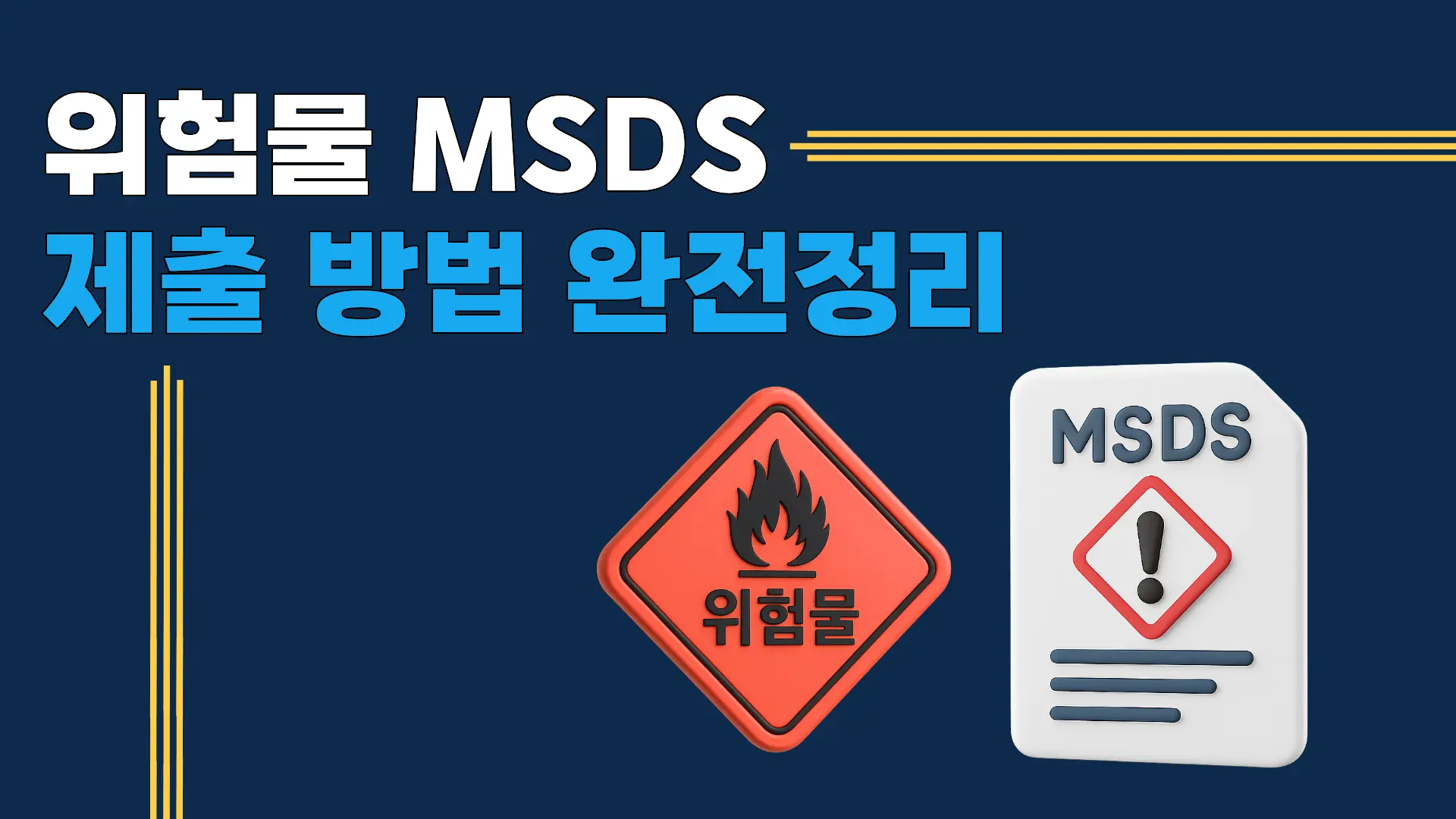
 KakaoTalk
 Naver Blog