China–Korea Freight Forwarding Rate Structure Explained
Every hidden surcharge, at a glance

Ever gotten wildly different quotes from different China–Korea freight forwarders for the same cargo on the same route — and then found a charge on the final invoice you'd never seen before? Most of the time it comes down to how much of the surcharge stack sits on top of the base ocean freight, and how much of it each forwarder actually discloses upfront. Here's a 2026 practical breakdown of the BAF, CAF, LSS and CIC surcharges that often go missing from quotes, who pays what under each Incoterm, and the full cost structure behind freight forwarding between China and Korea.

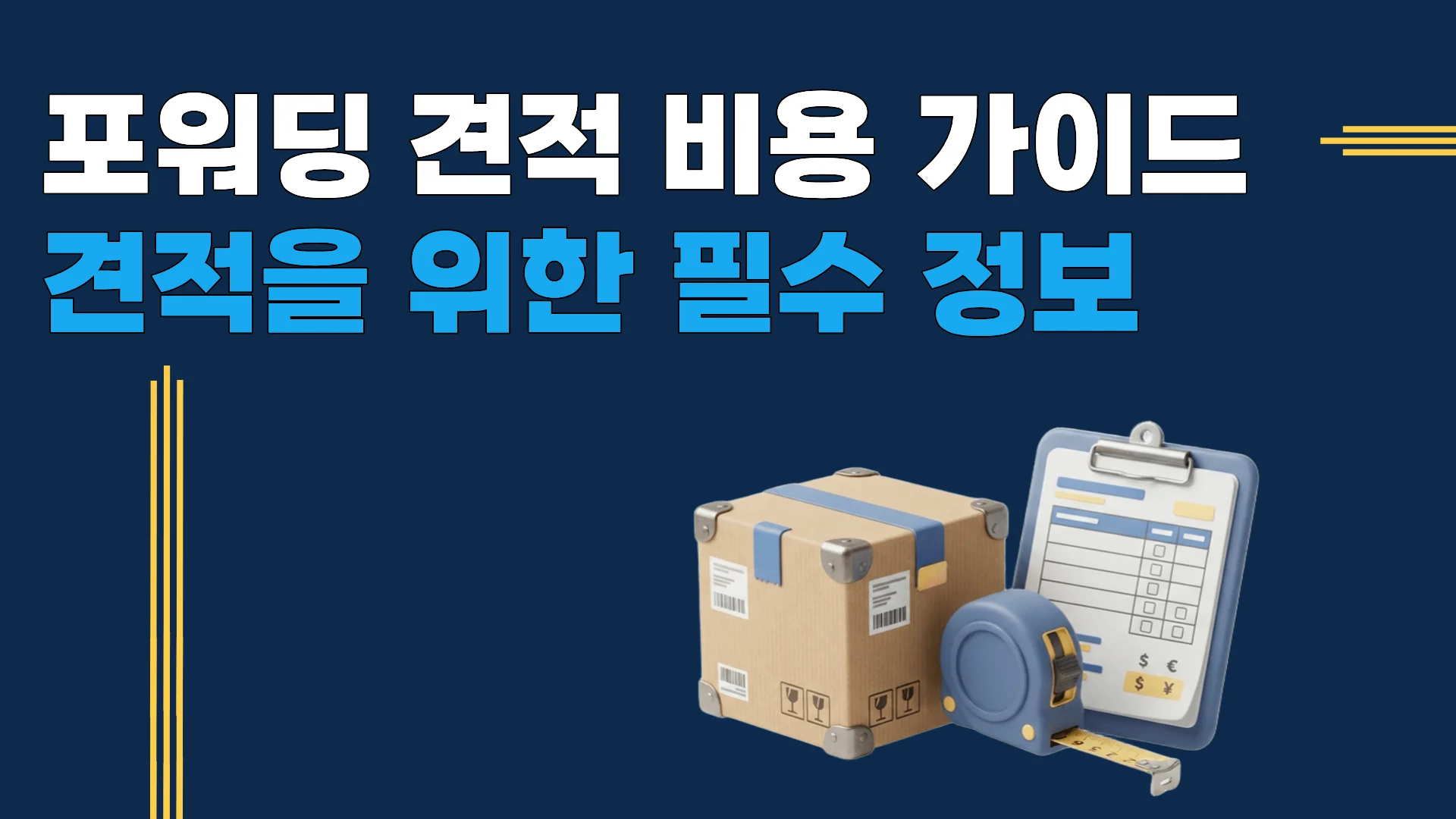
China–Korea freight forwarding rate structure — quote and surcharge breakdown diagram
📍 Scope of this guide: Tosome Logis is based in Incheon, South Korea, and specializes exclusively in the China–Korea trade lane — importing cargo from China into Korea and exporting cargo from Korea to China. This article does not cover freight forwarding between China and other countries. If your shipment moves between China and Korea, read on — for other routes, we likely can't help.

1. Why do China–Korea freight forwarding quotes vary so much?

Even for identical cargo on the same China–Korea route, quotes from different forwarders can vary widely. There's usually one reason: base ocean freight (O/F) is just the starting number — how much of the surcharge stack gets added on top, and how transparently it's disclosed, differs by forwarder.

It's the same structure as buying a plane ticket where the listed fare doesn't include the fuel surcharge or airport fees. If you don't understand the rate structure and simply pick the forwarder with the lowest headline freight, you can end up with unexpected charges once the cargo arrives in Korea — sometimes adding up to hundreds of dollars, occasionally over a thousand.

This guide walks through the base freight and surcharges that make up China freight forwarding rates, who's responsible for which cost under each Incoterm, and how to compare quotes accurately.

💡 If you're already mid-contract and an invoice line item doesn't make sense, reach out below and we'll help you break it down.

2. The basics of ocean freight — base rate and surcharges

Ocean freight on a China forwarding quote generally consists of two parts.

ComponentWhat it covers
Base rate (O/F, Ocean Freight)Core sea transport cost, priced per container or by CBM (volume)
SurchargesAdditional charges layered on top of the base rate — driven by fuel prices, currency swings, container supply-demand, etc.

Comparing forwarders on base rate alone is misleading. The China–Korea trade lane in particular carries more surcharge line items than many other routes, so a lower base rate doesn't always mean a lower total once surcharges are added.

3. Four surcharges that commonly go missing from quotes

Four surcharges show up especially often on the China–Korea lane. If a quote doesn't list any of these, treat it as a red flag that they may be missing, not included.

ChargeFull nameWhy it exists
BAFBunker Adjustment FactorOffsets carrier losses from bunker fuel price fluctuations
CAFCurrency Adjustment FactorOffsets currency exchange losses from settling freight in USD
LSSLow Sulfur SurchargeCovers the added cost of low-sulfur fuel required under environmental regulations
CIC (EIS)Container Imbalance ChargeOffsets container supply-demand imbalance on a given trade lane

These four charges aren't applied uniformly across every trade lane worldwide — whether they're charged, and how much, depends on the lane and the carrier. The China–Korea lane sees BAF, CAF and CIC especially often.

4. Who pays what under each Incoterm

In principle, which party bears these surcharges is determined by the Incoterm the shipment is contracted under.

Charge typeF-terms (EXW·FOB·FCA)C-terms (CFR·CIF)D-terms (DAP·DDP)
Freight surcharges
(BAF·CAF·LSS)
Importer paysExporter paysExporter pays
Destination charges
(CIC, etc.)
Importer paysImporter paysExporter pays

That's the theory. In practice, charges like BAF, CAF and LSS are frequently billed late by the carrier after arrival at the import country, which is a common source of disputes between exporter and importer. It's especially common for importers to get stuck with these costs even under a C-term (CFR/CIF) contract where the exporter should technically be paying.

⚠️ If your deal is on a C-term (CFR/CIF), the safest move is to agree with the exporter upfront, at the contract stage, on who covers these surcharges.

5. The full cost structure beyond ocean freight

A China forwarding quote doesn't stop at freight and surcharges. Once cargo reaches port, several more charges accumulate in sequence. Here's the typical full cost breakdown in practice.

Cost itemWhen it appliesWhat it covers
Freight + surcharges
(BAF·CAF·LSS·CIC)
At shipmentThe base and surcharge items covered in sections 2–3
THC (Terminal Handling Charge)Origin & destination portTerminal handling of container/cargo
CFS warehouse feeBefore/after loadingConsolidation/deconsolidation of LCL cargo into a container
D/O fee
(Delivery Order)
On arrivalFee for issuing the document needed to take delivery of cargo
Customs clearance feeAt clearanceCustoms broker's fee for filing the import declaration
Duties & VATAt clearanceCalculated from HS code and declared cargo value
Inland truckingAfter clearanceDomestic delivery from port to final destination
✅ A quote that bundles all of the above into one confirmed figure upfront is commonly called an all-in quote. The alternative — a low headline freight rate with the rest billed one item at a time — can leave you with a final invoice much higher than the original quote.

6. How to compare China–Korea freight forwarding quotes accurately

Understanding the rate structure doesn't help if a quote simply omits line items with no way to verify them. Use this checklist when comparing quotes.

1
Check for BAF·CAF·LSS·CIC on the quote
Confirm first whether these four items are explicitly listed.
2
If missing, ask directly
If they're not listed, ask the forwarder directly whether they're included.
3
Confirm the all-in total
Check whether THC, D/O fee, CFS warehouse fee and inland trucking are all included in the total.
4
Confirm the Incoterm first
Lock in the Incoterm before requesting a quote so you know which costs are yours to bear.
5
Get at least two quotes
Compare the line-item structure across two or more providers. Requesting a quote is free.

7. What's different when you work with Tosome Logis

Tosome Logis discloses every surcharge in the China–Korea freight forwarding rate structure transparently, from the quote stage onward.

What's included in a Tosome Logis China–Korea quote
📋BAF·CAF·LSS·CIC inclusion clearly stated alongside base freight
📦All-in confirmed quote covering THC, D/O fee, CFS warehouse fee and inland trucking
✅Quote = final invoice, 0% deviation
📑Upfront guidance on which costs are yours under your Incoterm
🚢Pickup across China — Shanghai, Shenzhen, Guangzhou, Weihai, Changsha, Yiwu and more — for shipment into Korea, and customs clearance on the Korean side

Send us your cargo type, quantity, and pickup or delivery location in China and Korea, and we'll lay out the full cost structure item by item.
8. Frequently Asked Questions

Ask the forwarder directly whether these charges are included. A quote that doesn't list them doesn't mean they won't be charged. Comparing quotes from a few providers and choosing one that discloses every line item transparently is the safest approach.
No. LSS (Low Sulfur Surcharge) is not a fixed cost — it may not be applied when fuel prices are low. Some regions and carriers fold it into the base ocean freight instead of listing it separately, so if you don't see it on a quote, it's worth confirming whether it's already included.
It depends on the Incoterm. Under FOB, FCA, CFR and CIF, the importer typically pays it; under DDP and DAP (D-terms), the exporter pays. In practice, because CIC is charged at destination, it's often billed to the importer regardless of contract terms, so it's worth confirming before the deal is finalized.
Yes, absolutely. You don't need to know any of this in advance. Just share your cargo details and the origin/destination, and we'll walk through each line item to provide a transparent all-in quote.
Compare the all-in total, not individual line items. To see the real cost difference, the final figure needs to include BAF, CAF, LSS, CIC as well as THC, D/O fees and inland trucking — not just the base ocean freight.
This guide and our forwarding service are specific to the China–Korea trade lane — importing from China into Korea and exporting from Korea to China. We are based in Incheon, South Korea, and do not handle freight between China and other countries. If your shipment involves China and Korea, feel free to reach out; for other routes we may not be able to help.
Contact

Get in Touch

Send us your item, size and destination
and we'll get back with a quote fast.

Address
401, 31 Dangmi 3-gil, Gyeyang-gu, Incheon, South Korea
Send us an email

Terms of Use & Privacy Policy

1. Personal Information Collected

Tosome Logis ("the Company") collects the following personal information to provide inquiry response, quotation and shipping consultation services.

  • Items collected: name, email, phone number, address, cargo details, and any other information provided by the customer
  • Method of collection: direct input via website inquiry form, email, or phone consultation

2. Purpose of Collection and Use

  • Responding to inquiries and quote requests
  • Confirming cargo details and making contact to provide shipping services
  • Service-related notifications and customer support
  • Improving service quality and providing tailored guidance

3. Provision and Sharing of Personal Information

The Company does not share personal information with third parties without the customer's consent, except in the following cases.

  • When the customer has given prior consent
  • When required by law or requested by a government authority
  • When minimal information must be shared with partner carriers (FedEx, DHL, UPS, etc.) to complete shipment

4. Retention Period

ItemReason for retentionRetention period
Inquiry and consultation recordsPreventing service confusion, dispute resolution3 months
Contract and payment recordsE-Commerce Consumer Protection Act5 years
Access logsProtection of Communications Secrets Act3 months

5. Disposal Procedure and Method

  • Paper documents: shredded or incinerated
  • Electronic files: deleted using methods that prevent recovery

6. Use of Cookies

  • Purpose: visitor analytics, personalized content
  • Opt-out: browser settings > block cookies

7. Privacy Officer

- Name: Hui-deok Ahn
- Contact: 23logis@naver.com
- Available: Weekdays 9:00 AM – 6:00 PM (KST)

8. User Rights

Customers may request to view, correct, or delete their personal information at any time. Requests are processed promptly following identity verification.

9. Security Notes

  • Use a combination of letters and numbers for passwords and change them periodically.
  • Log out and close your browser when using public computers.
  • Do not post personal information on public boards or chat.

10. External Reporting Contacts

📌 Effective Date

July 1, 2025

Don't worry if you're new to this
Just send us your cargo and destination.
One all-in quote covers freight plus every other charge.
💬 Ask about a China–Korea forwarding quote
KakaoTalk