
 KR
KR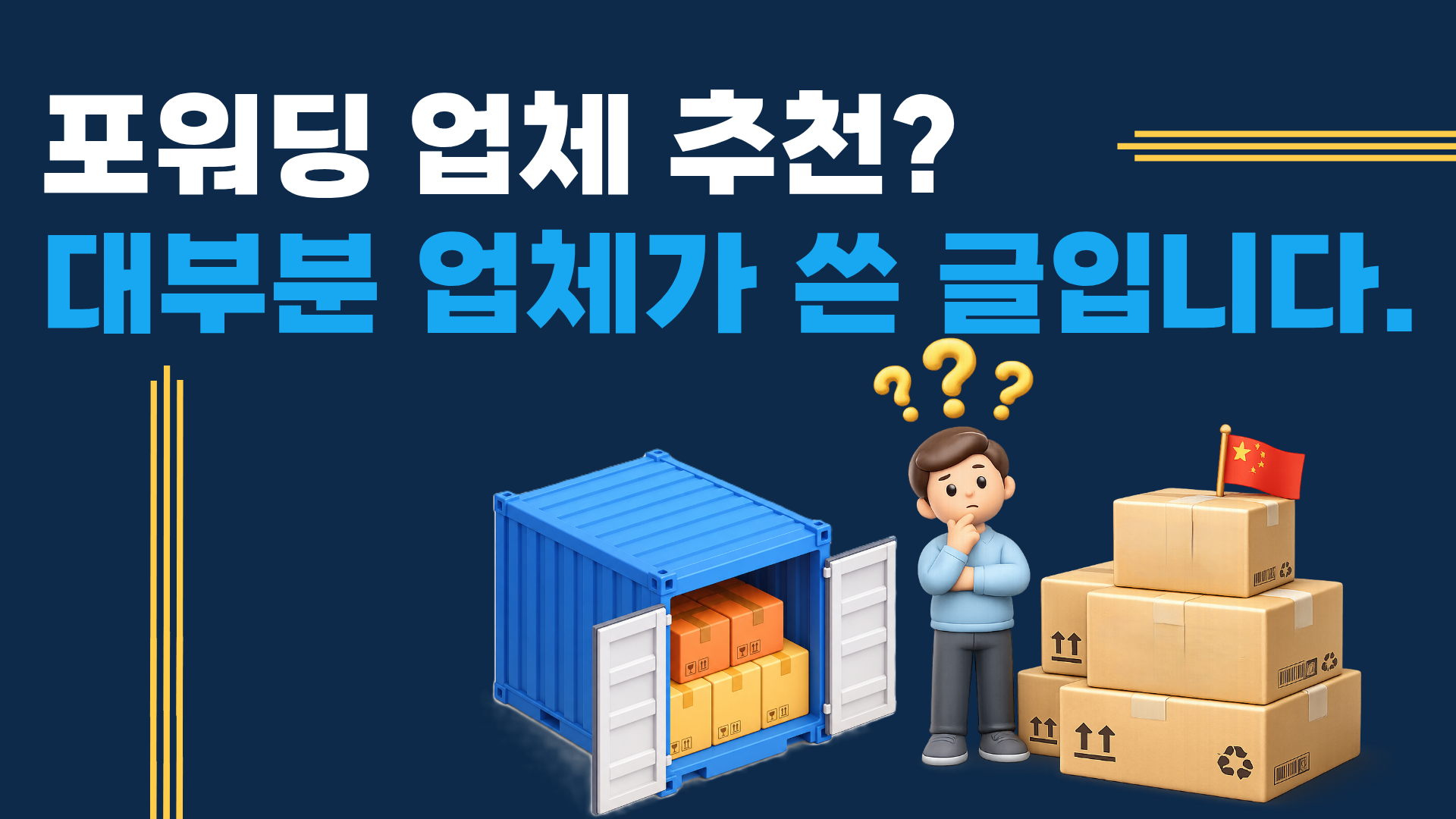
Most "Best China Freight Forwarder" Posts Are Written by the Forwarder Itself
Search "best China freight forwarder" on Naver and dozens of posts come up. Most of them, though, are content written directly by the forwarder's own operator or staff to promote their own company. It's hard to call that an objective comparison.
This post lays out the practical criteria we use at Tosome Logis to separate a good forwarder from a bad one, based on real customer shipments we've handled. And yes — we hold ourselves to the same standard.
The Most Common Mistake When Choosing a Forwarder
Many buyers pick a forwarder based on the freight quote alone. But the cheapest initial quote is no guarantee that the final invoice will be the cheapest too. Here are the problems that come up most often in practice.
| Common Mistake | What Actually Happens |
|---|---|
| Choosing on quoted price alone | Extra charges billed after arrival (CFS fees, storage, documentation, etc.) |
| Not checking whether the forwarder owns a local warehouse | A middleman's margin gets added → higher cost, unclear accountability |
| Not verifying customs clearance capability | Wrong HS code causes clearance delays and extra duties |
| Never confirming post-arrival support | Consignee issues, warehouse overstay, and other local problems can't be resolved |
China Freight Forwarder — Check These 5 Things
1. Does it directly operate its own local warehouse in China?
Check whether another company sits in the middle of the process from factory pickup to loading. A forwarder that runs its own local warehouse can inspect your cargo firsthand and quote freight without a middleman's markup. If a company only has a Korean office and relies on local partners for everything else, accountability gets murky the moment something goes wrong.
2. Does it have real LCL consolidation experience?
Confirm whether the forwarder has hands-on experience handling LCL (small-lot consolidation), not just FCL (full container). LCL requires consolidating multiple shippers' cargo into one container at a CFS — without real know-how, delays and damage follow. Forwarders without this experience often subcontract the job to another forwarder behind the scenes.
3. Is the gap between the quote and the final invoice zero?
A good forwarder's initial quote matches the final invoice. Avoid any forwarder that suddenly bills extra charges after your cargo arrives. During your first conversation, ask directly: "Are there ever charges beyond the quote?" If the answer is vague, that's a red flag.
4. Does it handle HS codes and customs clearance directly?
Customs clearance is the single most important stage in freight forwarding. An incorrect HS code means overpaid duties or clearance delays. If a forwarder has no in-house clearance capability and relies entirely on an outside customs broker, don't expect proactive service like pre-checking HS codes and advising you on the best applicable duty rate.
5. Does it resolve problems directly at the destination after arrival?
Problems can still come up after your cargo reaches its destination — an unreachable consignee, a warehouse storage-period overrun, customs requesting extra documents, and so on. A forwarder that only handles things from the Korean side can't fix problems that happen locally. Confirm whether they communicate directly with their local partner to resolve issues, not just relay messages.
Why Choose Tosome Logis
Tosome Logis receives cargo directly through our own local warehouses in Guangzhou, Shenzhen, Yiwu, and other major China origins. The gap between our quote and the final invoice is zero, and we pre-check applicable HS code duty rates before your shipment leaves. If a problem comes up locally after arrival, we resolve it directly — regardless of time zone.
From LCL starting at 1 CBM to a full FCL container, we'll recommend whichever method makes sense for your cargo size and item type. Just tell us the factory location, origin, and destination, and we'll send you a free comparison quote.
Frequently Asked Questions
- How do I find a China freight forwarder?
- You can search blogs, trade communities, or ask for referrals, but most recommendation posts are marketing content written by the forwarder itself. Compare on LCL/FCL track record, whether the forwarder owns its local warehouse, and quote accuracy instead.
- Does switching forwarders actually lower costs?
- On the same trade lane and cargo, rates can vary by roughly $15–$35 per CBM between forwarders. Forwarders that operate their own local warehouse tend to quote lower rates because there's no middleman markup.
 KakaoTalk
 Naver Blog